
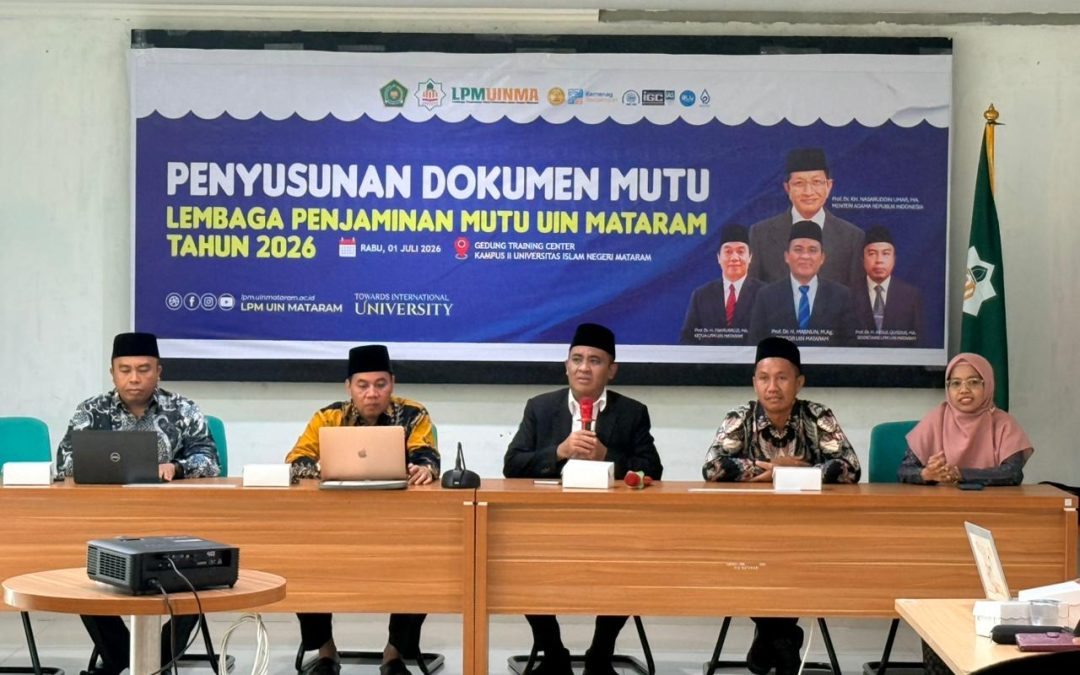
MATARAM-The Quality Assurance Institute (LPM) of the State Islamic University (UIN) Mataram held a strategic activity for the systematic preparation and revision of institutional quality documents. This step is taken as a tangible commitment from the campus to design, formulate, and establish standard operating procedures to evaluate and continuously improve academic quality. The preparation of this document has become increasingly crucial following UIN Mataram’s significant step of preparing to open a new Faculty of Medicine, a major momentum that demands the absolute strengthening of the Internal Quality Assurance System (SPMI).
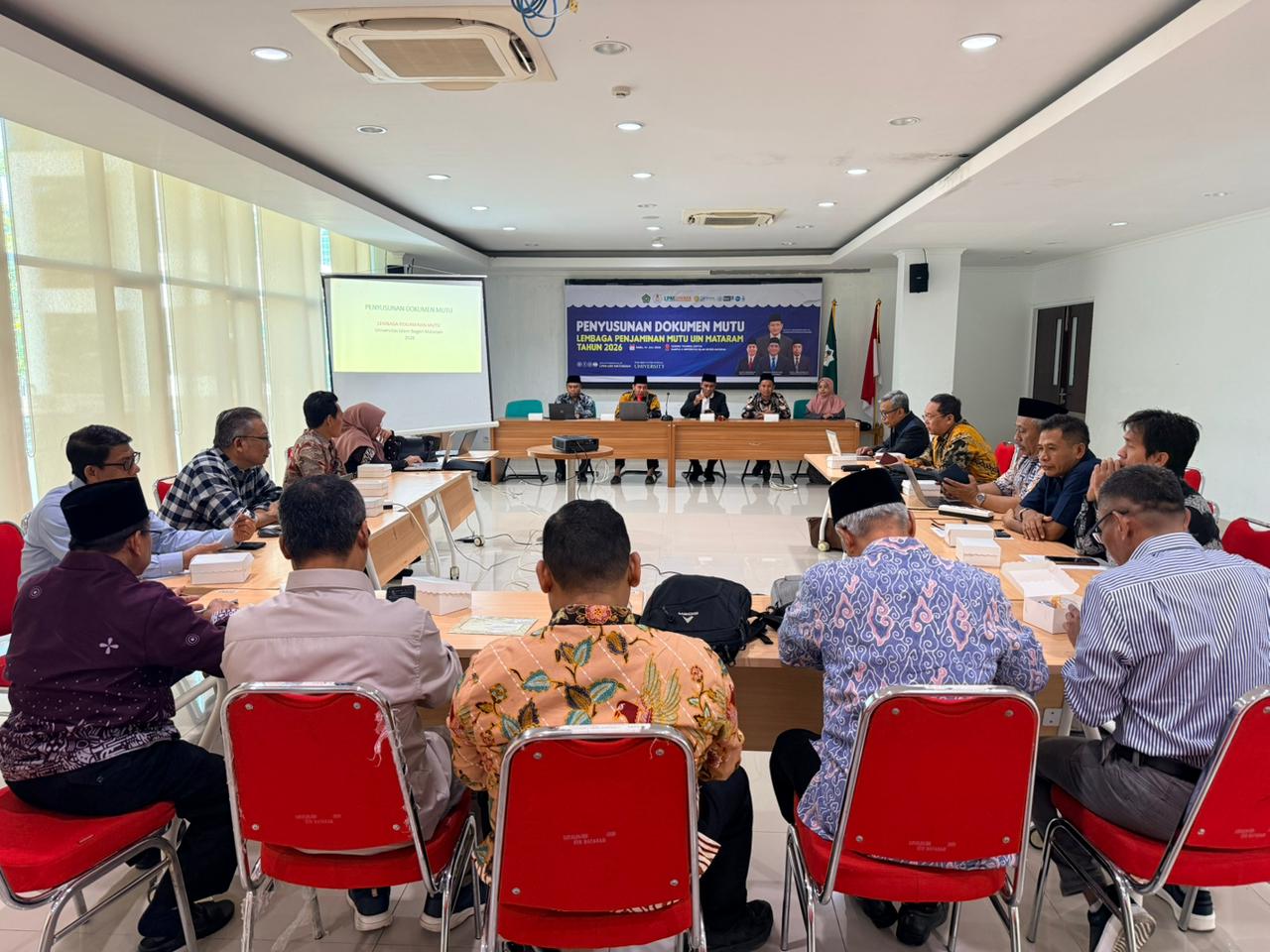
The head of the LPM UIN Mataram, Prof. Dr. Fahrurrozi, M.A., expressed his gratitude for successfully executing this important agenda while directly guiding the proceedings. He explained that the quality document being prepared encompasses governance from the university level and faculty down to the study program. The quality document that has been formulated will later be requested for in-depth suggestions and input from the professors of UIN Mataram present so that its implementation in the field runs smoothly.
The urgency of this quality assurance was also emphasized by the Rector of UIN Mataram, Prof. Dr. Masnun Tahir, during the official opening of the event. In his speech, the rector expressed his highest appreciation to the LPM team and all staff who have tirelessly worked to uphold the institution’s quality. Prof. Masnun revealed that amidst the busy campus agenda, the quality assurance system of UIN Mataram was briefly the focus of discussion with the Director of Human Resources of the Ministry of Health (Kemenkes) of the Republic of Indonesia in preparation for the opening of the Faculty of Medicine.
For the Ministry of Health, compliance with the quality assurance system is a non-negotiable requirement before discussing the fulfillment of human resources and infrastructure.
In response to the discussion, the rector emphasized that the quality of quality assurance at UIN Mataram is beyond doubt. The concrete evidence is that almost all study programs at UIN Mataram have successfully achieved Excellent accreditation, and even at the institutional level, this campus has obtained an Excellent rating and ISO certification.
Furthermore, Prof. Masnun reminded us that the formulation of this document is an effort to uphold academic dignity through the concept of a harmonious ‘Trilogy’ of work at UIN Mataram. In this concept, the task of overseeing academic quality rests with the LPM, governance matters fall under the responsibility of the Internal Supervisory Unit (SPI), while payment and welfare mechanisms are managed by the Public Service Agency (BLU). The rector emphasized that both internal (SPMI) and external (SPME) quality assurance cycles must be a shared focus to ensure UIN Mataram’s progress benefits the campus and the broader community.
After the opening session, the event continued with the presentation of the core material guided by the Head of the Quality Standards Center of LPM UIN Mataram, Prof. Dr. H. Yusuf, M.Pd. In his direction, Prof. Yusuf emphasized that the revision of the quality document this time must be aligned with the latest national regulations, namely Permendikti Saintek Number 39 of 2025. The institution must immediately adopt the new nomenclatures and terms introduced by this latest regulation in the realm of higher education quality assurance.
UIN Mataram will adjust 9 quality standards to align with the Permendikti Saintek. In general, this formulation includes four main SPMI documents along with their practical guidelines, namely the Quality Policy, which contains the vision and strategic direction; the Quality Manual as a practical implementation guide; the Quality Standards, which set specific criteria for the curriculum and facilities, the Quality Form as a record of work evidence, and the Quality Manual or SOP as a guide for written work procedures.
UIN Mataram is now tightening the implementation of Fiqh Ibadah for students, in line with the latest policy from the Ministry of Religious Affairs of the Republic of Indonesia that strengthens practical religious understanding. Through this policy, all students are prepared to have mature socio-religious competencies when they enter society, with a minimum standard of being able to become prayer leaders and lead dhikr. As a form of real testing, students will undergo direct practical tests at the UIN Mataram Campus Mosque, starting from acting as the imam of the prayer to becoming the Friday sermon leader.
The dynamic activity of preparing quality documents involves 25 selected participants, consisting of a lineup of professors and doctors within the UIN Mataram environment. In the future, all invited participants will be officially delegated as the drafting team and the main responsible parties for the quality document produced to ensure the sustainability of UIN Mataram’s quality.